

RIPPLE
A participatory methodology for working across ecosystems, institutions, and mandates
RIPPLE is a more-than-human participatory methodology developed by Living Imaginaries. It supports organisations working with complex, place-based challenges to reflect on how governance is shaped and how it might be practised differently.
RIPPLE is designed for contexts where ecosystems cross administrative boundaries, where multiple mandates and forms of authority overlap or where conventional policy approaches struggle to address long-term, relational issues. Rather than offering predefined solutions, RIPPLE creates a structured safe space for shared understanding, orientation, and the identification of meaningful directions for change.
The methodology is always grounded in place. Each RIPPLE process is shaped by the specific ecosystems, species, histories, and relationships present in a given context.
Why ripple
Changing how governance sees before deciding how it acts
Most governance processes are organised around responding to problems, managing risks, or optimising within existing constraints. While necessary, this orientation leaves little space to ask a more fundamental question: what kinds of futures are these systems implicitly working toward, and which possibilities are being excluded before decisions are even made?
Long before policies are drafted, imaginaries shape what governance sees, values, and treats as realistic. These often-unspoken assumptions influence how ecosystems are framed, which actors are recognised, and which forms of governance are considered legitimate. Yet most institutions lack practical ways of working with imaginaries directly.
RIPPLE exists to address this gap. It provides a structured, future-led way for institutions and communities to examine and reshape the imaginaries guiding their decisions, and to design from the futures they want to move toward rather than from the constraints they inherit.
From enlightenment to entanglement
Governing with more-than-human worlds
Most governance systems are shaped by imaginaries that separate humans from the environments they govern. Rivers, seas, and ecosystems are treated as settings, resources, or risks to be managed. This produces a partial understanding of living systems and reinforces governance logics that prioritise control, optimisation, and extraction, while sidelining relationships, dependencies, and ecological limits.
RIPPLE starts from a relational understanding. It recognises that governance always takes place within living systems, not outside them, and supports attention to ecological relationships, dependencies, and limits, as well as to how non-human beings and processes shape what is possible, sustainable, or just.
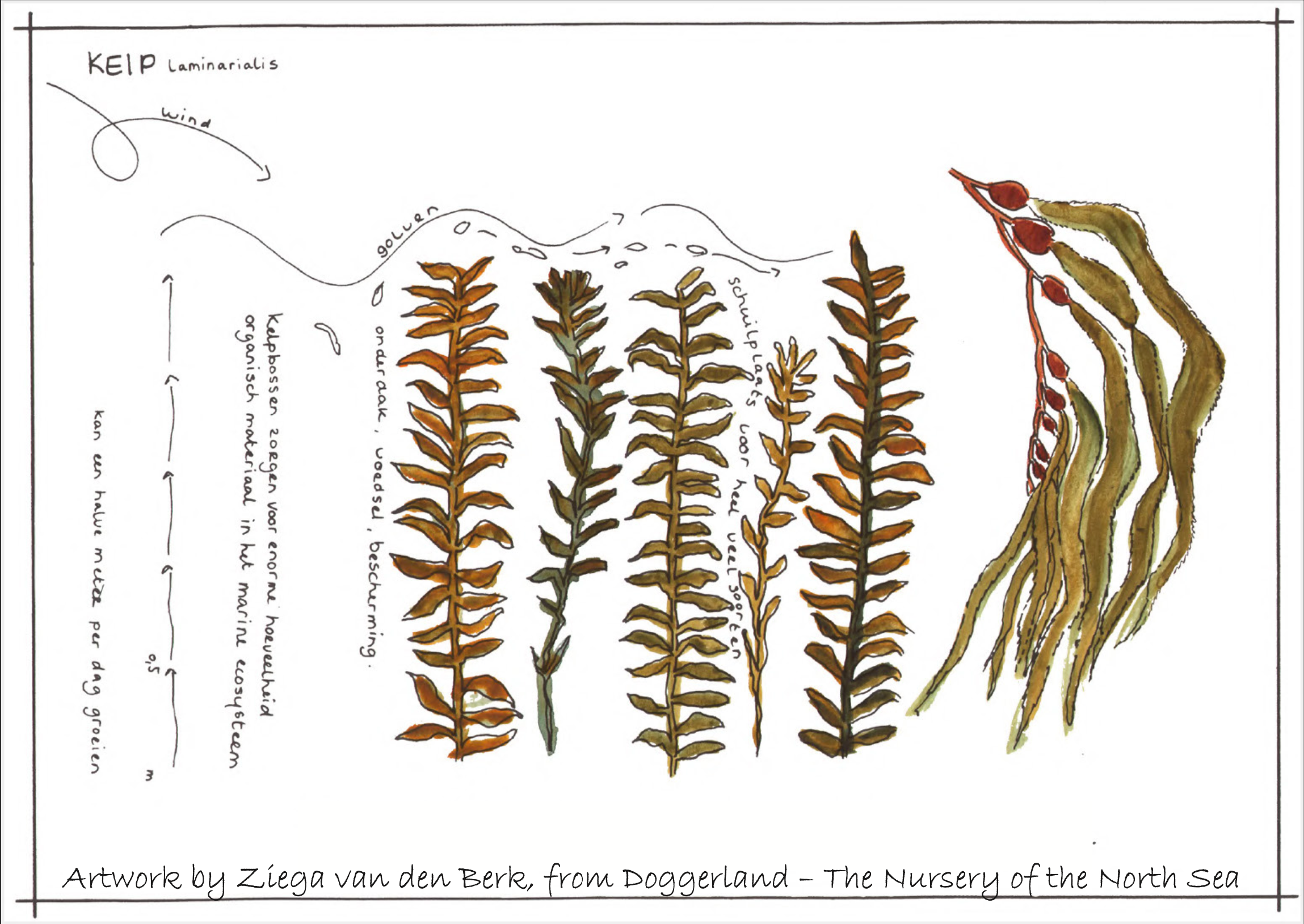
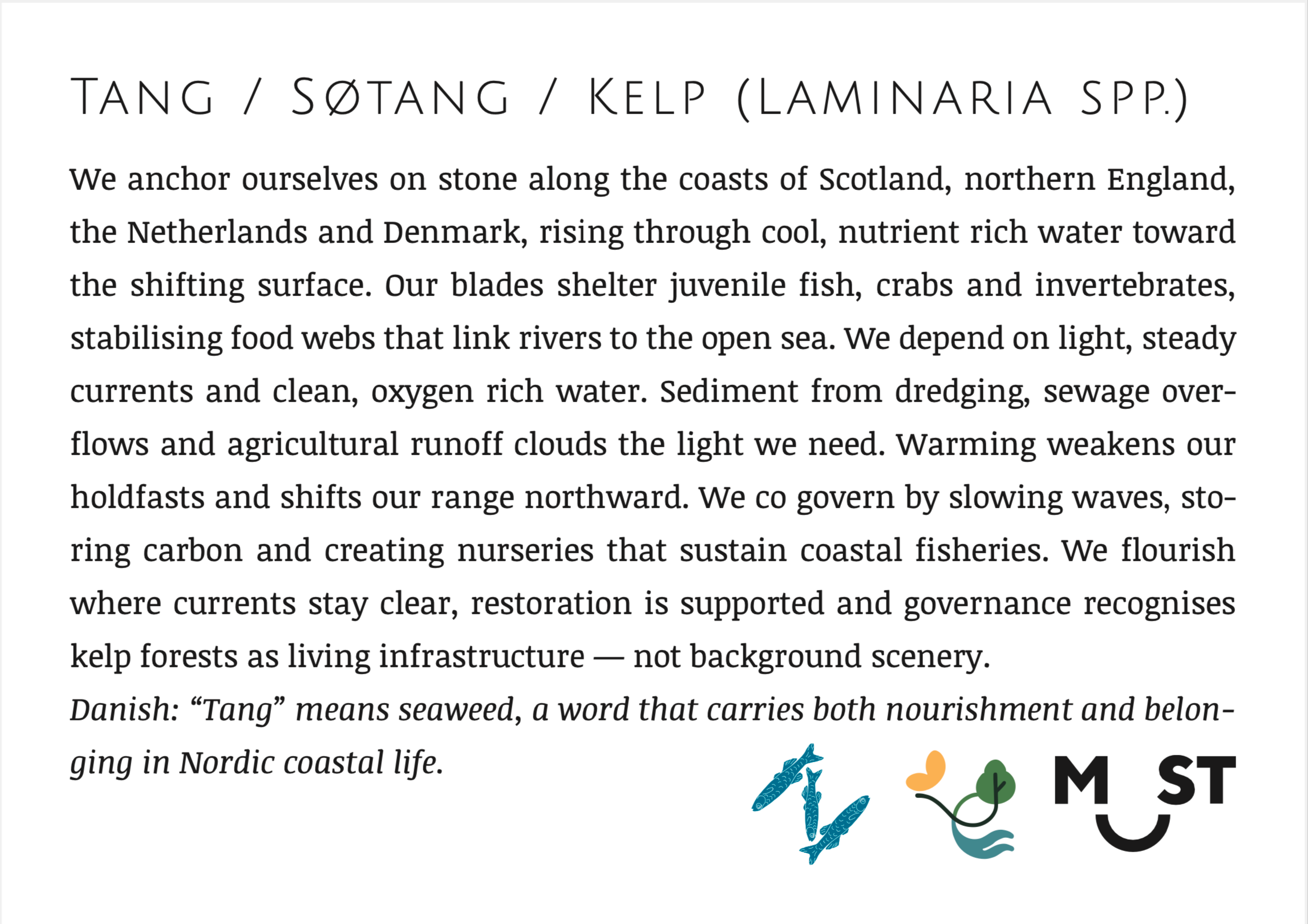
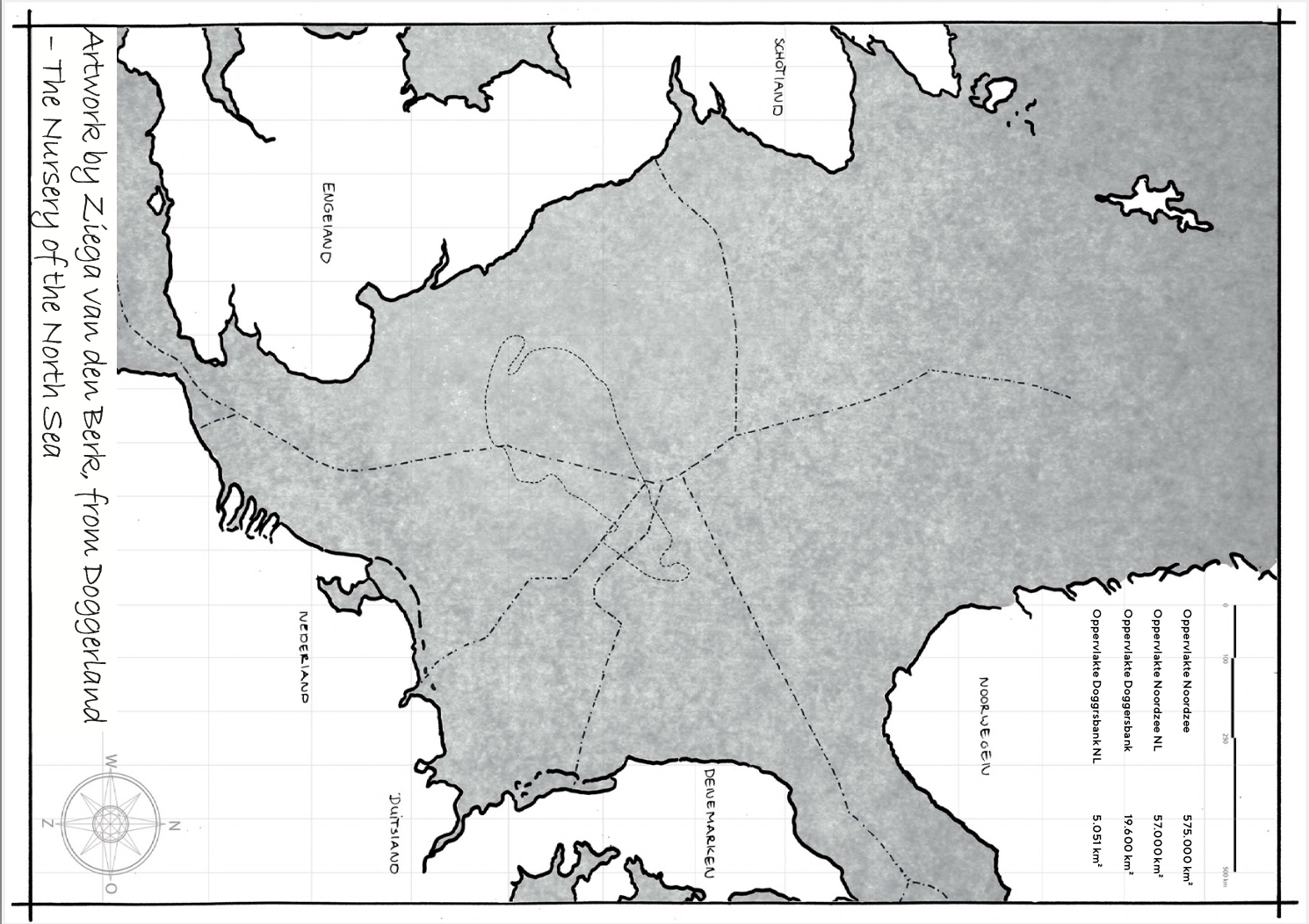
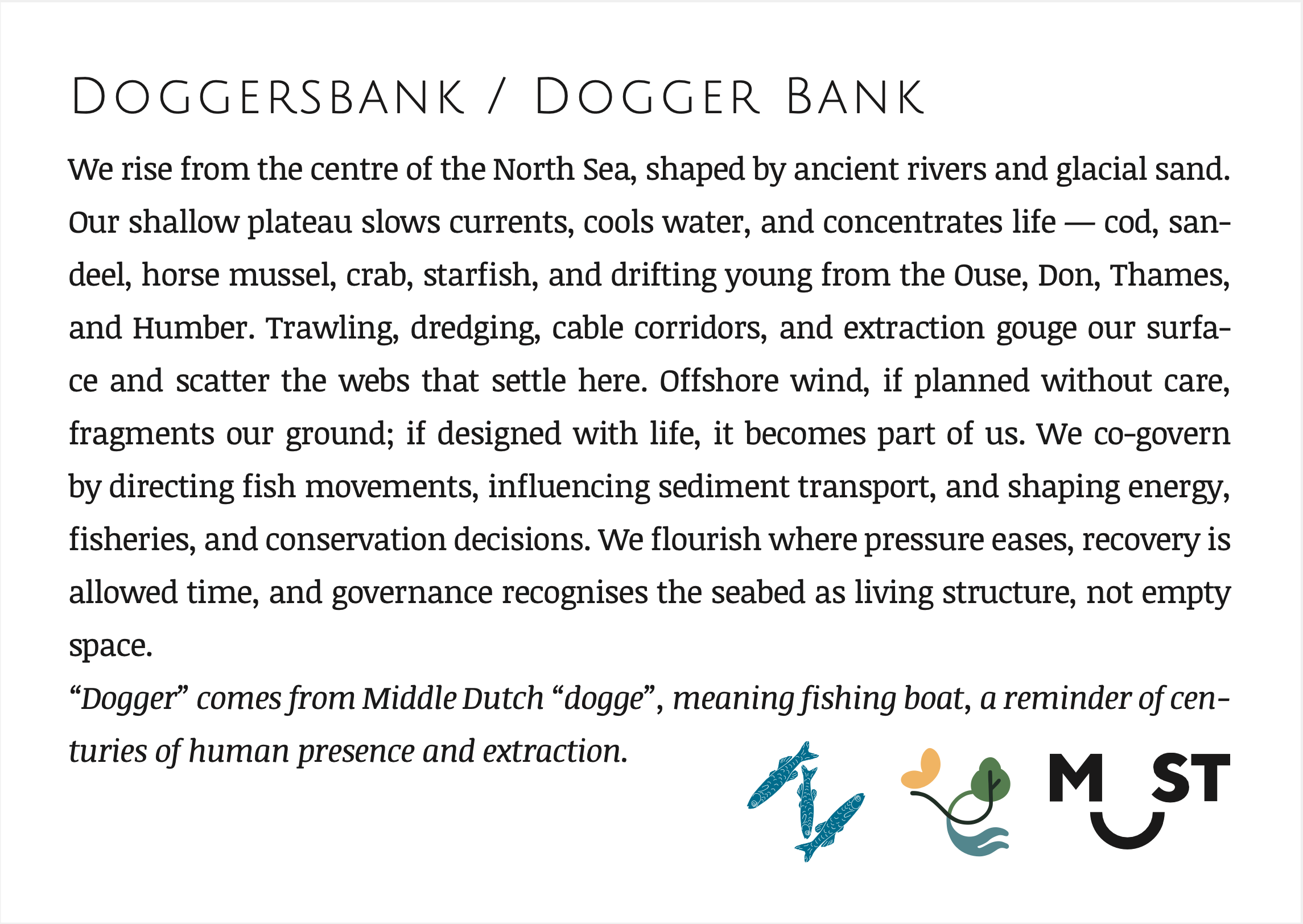
Artwork landscape architect Ziega van den Berk, from Doggerland, the Breeding Ground of the North Sea.
Texts by Living Imaginaries.
This reorients governance from managing nature to governing with rivers, seas, species, and ecological processes. Ecosystems are approached as relational systems with agency, histories, and constraints that governance must learn to respond to.
This shift does not remove human responsibility or institutional authority. It reframes responsibility as relational: humans remain accountable for decisions and care, but authority is exercised within entangled ecological worlds, grounded in stewardship and reciprocity.
RIPPLE in practice
RIPPLE has been piloted through a series of governance processes exploring relationships with the North Sea and its connected rivers.
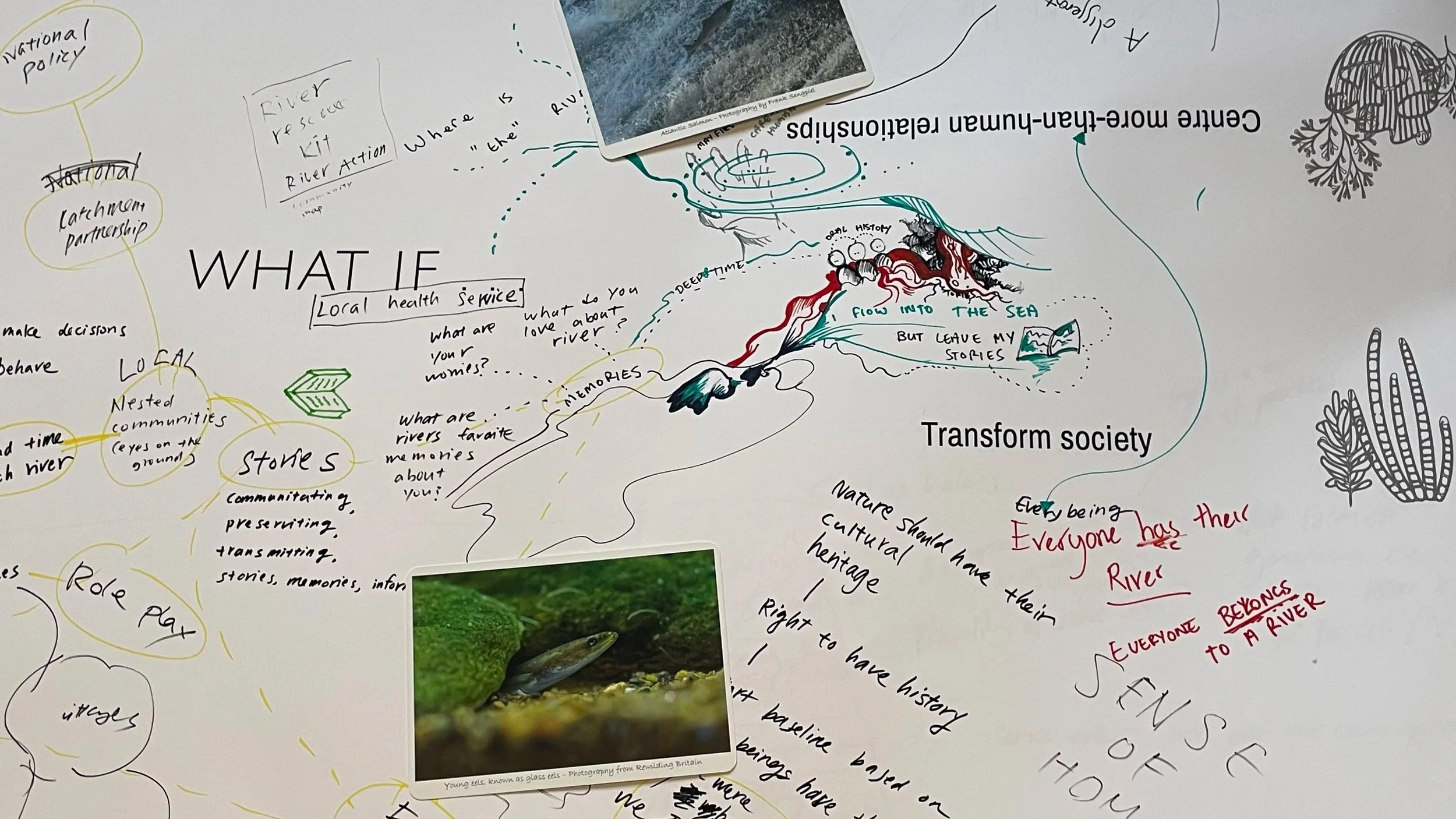
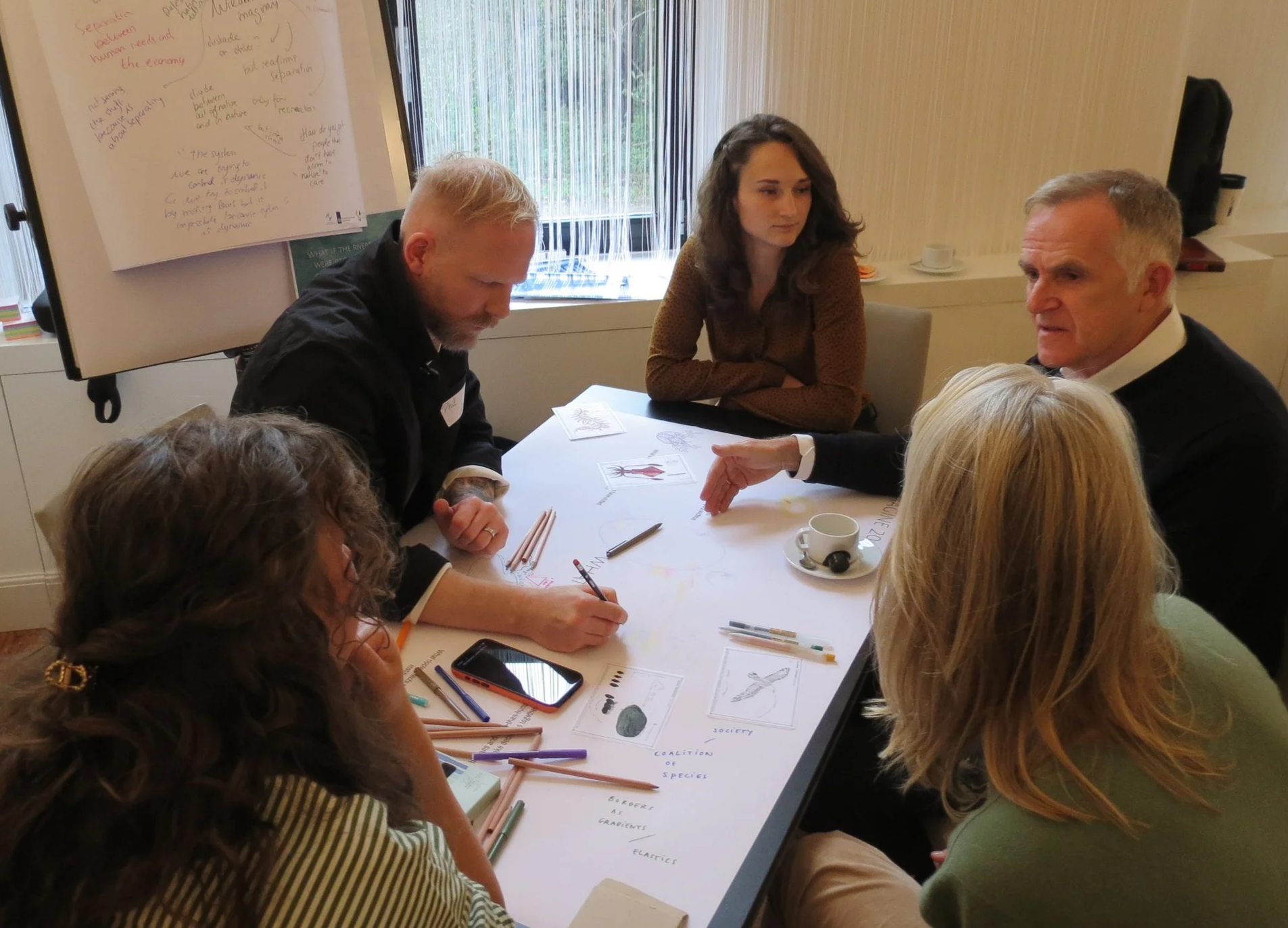
The first workshop was co-hosted with the Netherlands Environmental Assessment Agency (PBL), part of the Dutch government, in collaboration with the Embassy of the North Sea. It brought together policymakers, researchers, civil society organisations, artists, and practitioners working across marine and river governance to reflect on how governance might evolve when ecological relationships and more-than-human perspectives are taken seriously.
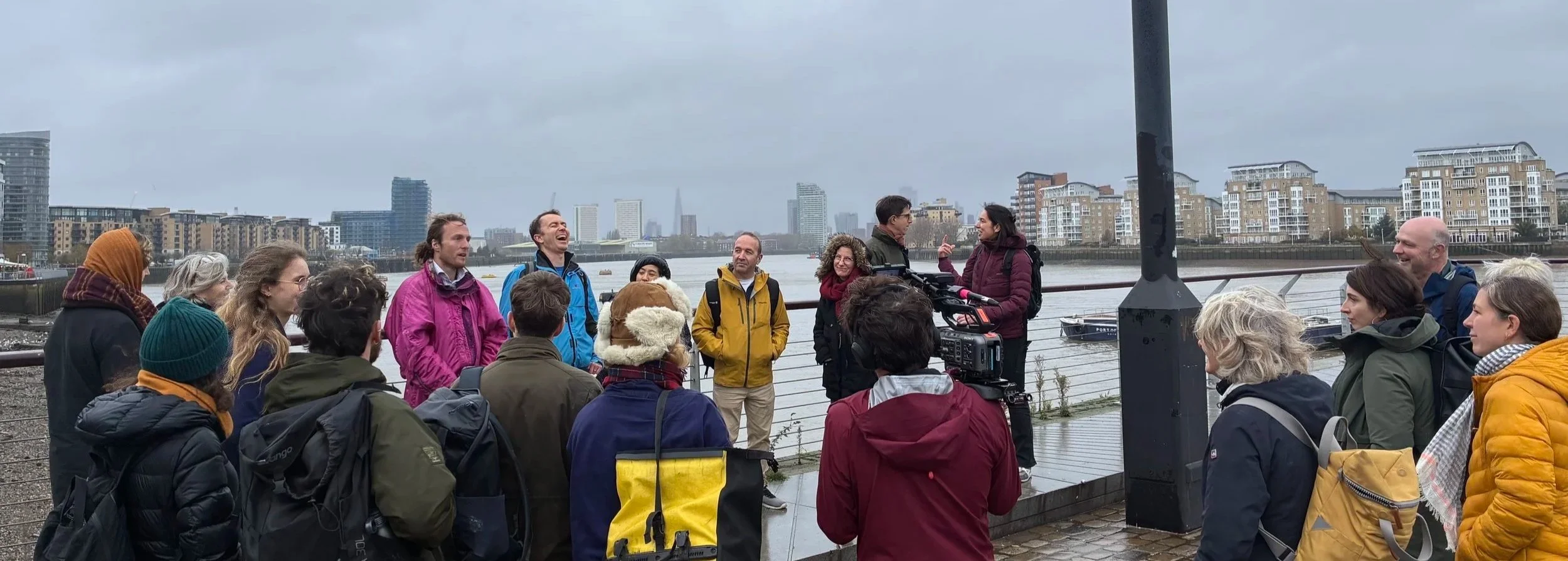
A second RIPPLE workshop was convened in London in collaboration with the ASRA Network, bringing together community organisations, researchers, and policy actors working across rivers, biodiversity, and democratic innovation.
Across these contexts, the process created a space for actors from different sectors and mandates to question dominant governance assumptions, connect emerging initiatives, and explore relational approaches to governing shared ecosystems.
RIPPLE and other methodologies developed by Living Imaginaries are shared to support learning, teaching, and non-commercial research.
The methodologies may be referenced and explored for educational purposes. Commercial, consultancy, or marketing use is not permitted without prior agreement and involvement of Living Imaginaries.
RIPPLE © 2025 by Living Imaginaries is licensed under CC BY-NC-SA 4.0