

Living Imaginaries
Reimagining how we govern, relate, and live in a more-than-human world.

Follow us on social media for updates

Governance reflects how we imagine the world.
We change governance by changing the imaginaries that underpin it.
Our approach bridges arts and sciences, policy and practice to co-design and implement relational governance architectures structured around interdependence between ecosystems, communities, and economies.

Why imaginaries
Many efforts to address environmental and social challenges focus on urgent solutions. Urgency can be necessary. But lasting change requires more than responding to crises. It requires expanding how we imagine the systems we are trying to transform.
Every policy, strategy, or intervention is shaped by deeper assumptions about how the world works. These underlying worldviews, what we call imaginaries, influence which problems become visible, whose knowledge is valued, and what kinds of futures institutions believe are possible.
At Living Imaginaries, we work with imaginaries as a lever for systems change. When these underlying assumptions shift, new forms of governance, policy, and collaboration can emerge.
For example, when oceans are imagined primarily as trade routes, their ecological, cultural, and multispecies dimensions fade from view. When food is framed as a supply chain, nourishment becomes a linear process of production and consumption, rather than a living system connecting soils, communities, economies, and health.
By making these imaginaries visible, we open space to co-design alternatives. We work with institutions and communities to surface dominant assumptions, co-create new governance approaches, and support their implementation in policy, practice, and everyday systems.
For us, imagination is structural and hopeful.
We support organisations to build from the futures they seek to create, rather than reacting from the crises they inherit.

Claudia Fernandez de Cordoba Farini
Founder & Chief Imaginaries Officer
Claudia is a cross-pollinator bridging food, climate, health, and more-than-human governance. She has shaped regional and national strategies, co-leading WHO’s food systems and climate change strategy across 38 Asia–Pacific countries, leading the UK’s first One Health strategic vision at DEFRA with eight teams, and contributing to the UK’s negotiations on the WHO Pandemic Accord to advance upstream socio-ecological approaches.
She founded Living Imaginaries as a space to integrate imagination, care, and multispecies justice into how we design governance, co-create knowledge, and drive institutional change. The initiative grows out of the intersection of her policy and practice work and her PhD research at UCL, which reimagines biodiversity governance through more-than-human ways of relating with the North Sea and its connected rivers.
HOw we Work
Between the institutional and the insurgent
We work with governments, international organisations, and research centres; as well as with civic labs, artistic spaces, and community initiatives. We create space for emerging approaches to be recognised, resourced, and embedded into practice; while supporting established institutions to think more expansively, reflexively, and relationally.
From imagination to implementation
We support implementation by co-developing governance prototypes, facilitating cross-sector workshops, building future-oriented tools, and advising on institutional change. This means working across strategy, design, and policy to help reimagined systems take root in real contexts.
We surface grounded alternatives already alive in local contexts, and support exchange across geographies, political systems, and ecosystems. This creates space for shared learning without flattening difference, and for change that travels without losing its roots.
We operate translocally
“ Because imagination is not always otherwise, sometimes is elsewhere. ”
– Robert Macfarlane
Current Projects
Marine governance
Collaborating with the Embassy of the North Sea and Dark Matter Labs to reimagine biodiversity governance with rivers and seas by centering more-than-human perspectives through legal, ecological, economic, and cultural lenses
More-than-human democracy
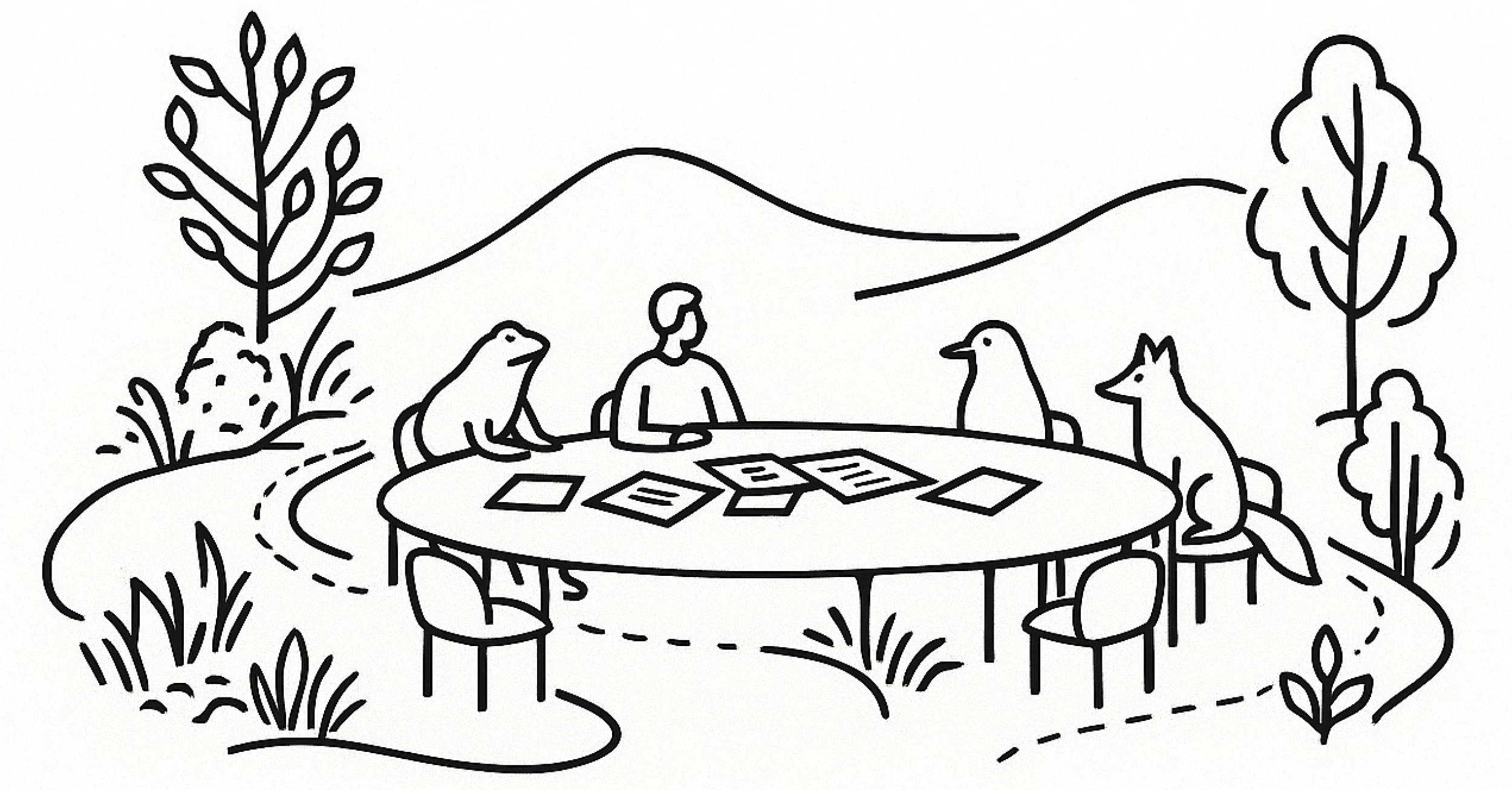
Developing a typology of emerging practices of nonhuman representation and participation, laying the groundwork for more-than-human democratic innovations.
In collaboration with the Centre for Deliberative Democracy, the Knowledge Network on Climate Assemblies (KNOCA) – supported by the Centre for Animals and Social Justice, Participedia, and the University of Westminster.
Cinematic worldbuilding for interspecies futures
Collaborating with the Royal College of Art’s Ficta Ordo studio as part of the superFUTURES Field Guide Network, working with a diverse community of practitioners and students to explore future rituals, worldbuilding, and interspecies organisation through film and spatial practice.
Previous Projects
EU Food systems and biodiversity
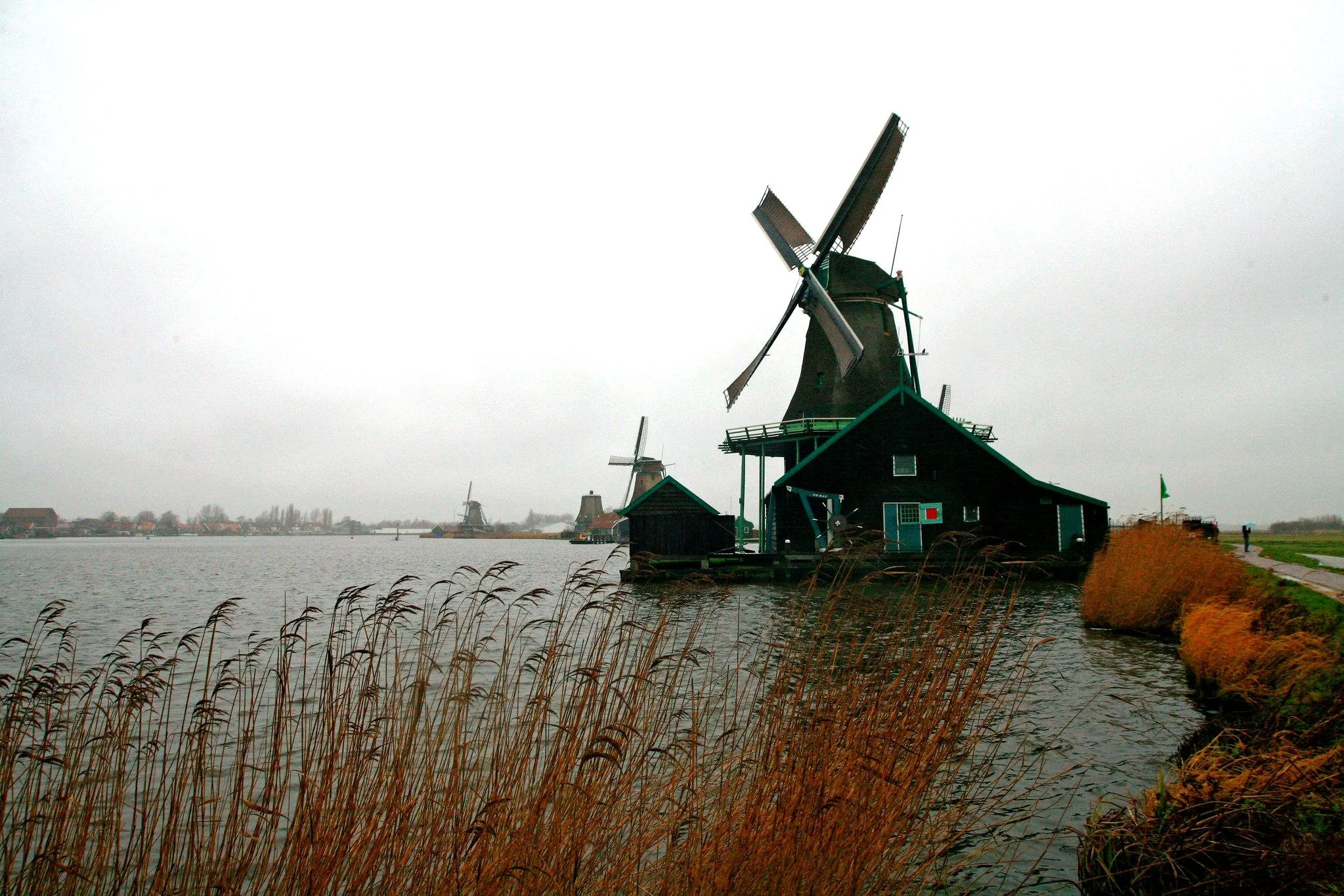
Commissioned by the Netherlands’ government Environmental Assessment Agency, Wageningen University, and the Netherlands Food Partnership to explore biodiversity narratives in food system transformations, opening pathways for more plural, reflexive, and systemic governance.
Plural Pathways for Biodiversity in Food Systems Governance Report
WHO Asia–Pacific regional strategy on climate change and food systems (2025–2030)
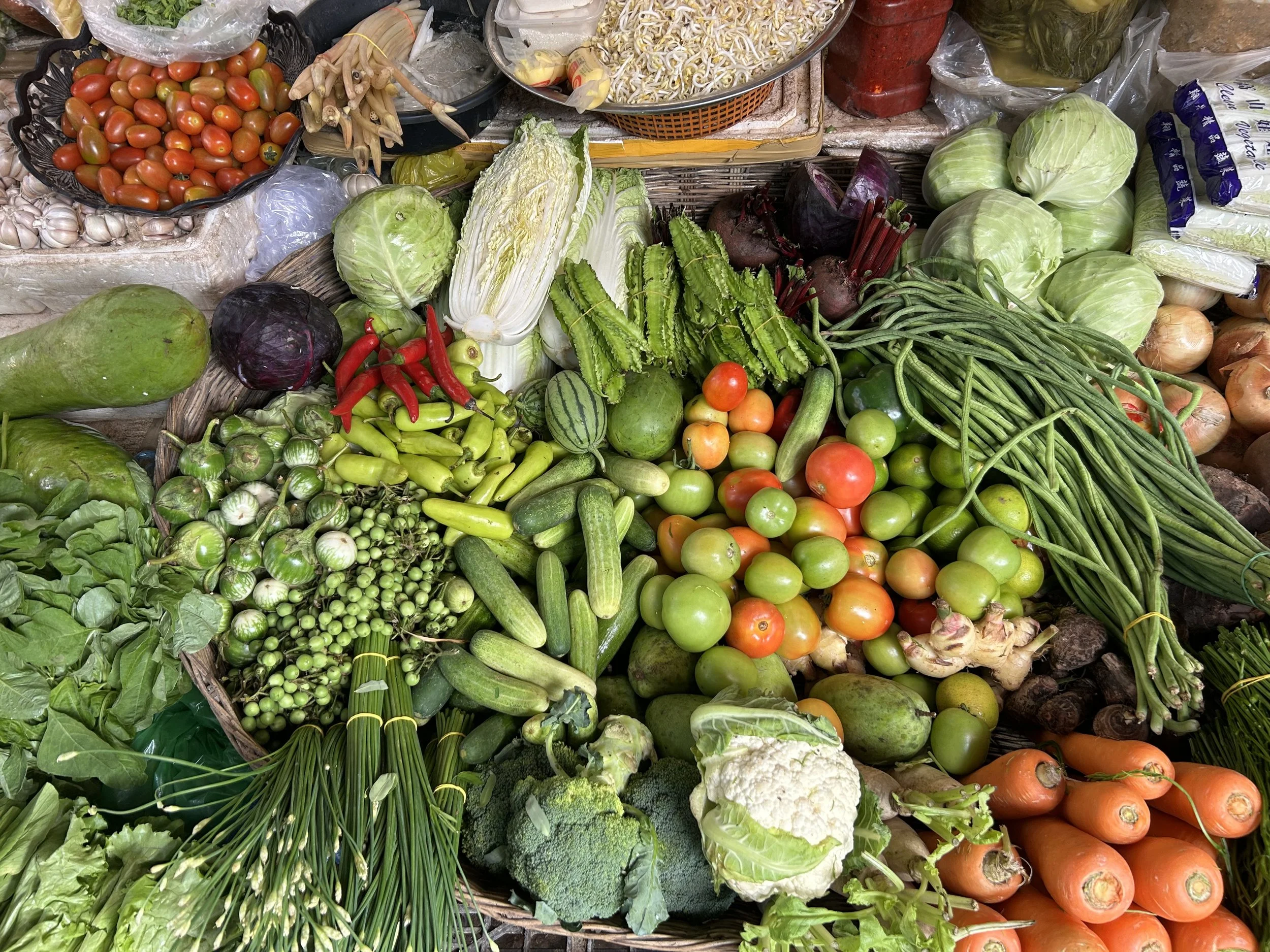
Founder co-led the development of the WHO’s regional strategy on food systems and climate change for 38 countries. The strategy was co-created with member states, regional institutions, international agencies, researchers, and grassroots networks, and centres the political-economic, environmental, and health drivers.
WHO Asia-Pacific Centre for Environment and Health five-year strategy
Connect with us to co-create futures that honour interdependence among people, planet, and all forms of life.
Follow us on social media for updates
☞
Let’s re-imagine together.
